Makom: the design architecture, second draft
The room that teaches silence, the table that stays warm, and the goodbye that stays open. A charter of practice for a one-room Makom, written for Makom.community.
Makom: the design architecture, second draft
The room that teaches silence, the table that stays warm, and the goodbye that stays open. A charter of practice for a one-room Makom, written for Makom.community.

Makom is a community built on the values of Orthodox Judaism. It is not a new denomination. The practice it keeps is the practice it inherited, and the framework it runs on is the one the tradition already provides. What is new is the how: a room built to welcome before it judges, carried by conviction rather than by a man at the front.
The founding words
Every position in this architecture hangs off one line, spoken in the community's voice and never one founder's. The founding words:
Out of the belief that on Shabbos the phone rests. The room keeps the day the way the tradition intends, and the distraction stays outside with the cars.
Out of the belief that families own their goodbye. The goodbye Makom embraces is the open one: seeing a loved one one last time is honor, not indignity. No family is obligated, and every family's choice is led with warmth, not at the desk.
Out of the belief that the sanctuary is kept in awe and the table is kept warm beside it. Reverence in one room, hospitality in the next, and neither asked to be the other.
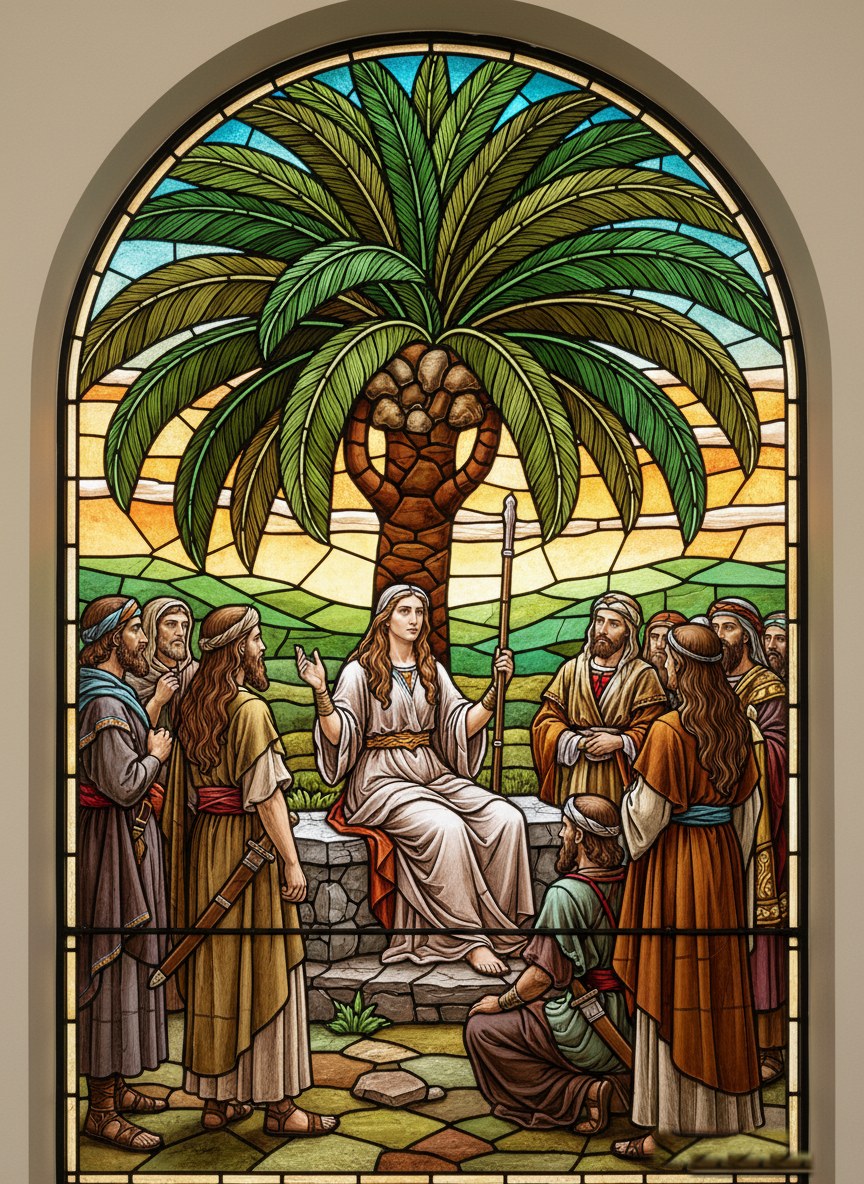
Out of the belief that the gabbai's work is the community's logistics, and that Devorah HaNeviah judged at the palm tree, so a woman can hand you a line. The honors list belongs to whoever serves the community's logistics, by merit and by design.
Out of the belief that welcome means you are received, not that the room bends. The door asks nothing of who you are; what the room does stays the tradition's.
A siddur, not a franchise
Makom is an idea before it is a building, and it duplicates the way a siddur does, not the way a franchise does. A franchise has a head office that owns the recipe and checks every store. A head office over Makoms would be a denomination, the one thing Makom refuses to become.
Instead, the founding words are the authority. Any town that keeps them is a Makom, wherever it is, and runs itself by them. A group that drops them has walked out on its own; nobody has to push it. The words are the only gate, and anyone can walk through it by keeping them.
What keeps the copies honest:
- The core is short and testable. "Families own their goodbye" can be checked; "warm and welcoming" cannot. Specific words police themselves.
- The members. The charter is one public page, and anyone in the room can ask, "where does it say that?"
- A beis din for real disputes, case by case. Each Makom turns to a court that room itself trusts for that one question, the way communities have always settled things. Different Makoms can pick different courts. What never exists is a permanent court over all of them, because that is a headquarters again.
- The keeper of the text. No office holds power over any Makom. The one thing that exists is a keeper of the text, who hosts the founding words at makom.community so every copy stays findable. That is a librarian, not a boss: it cannot tell a room what to do. And if a Makom ever disagreed with the keeper, the words travel with it; it would simply publish the text under its own roof. The text is the authority. Whoever holds the page only holds the light switch.
The sanctuary is kept in awe
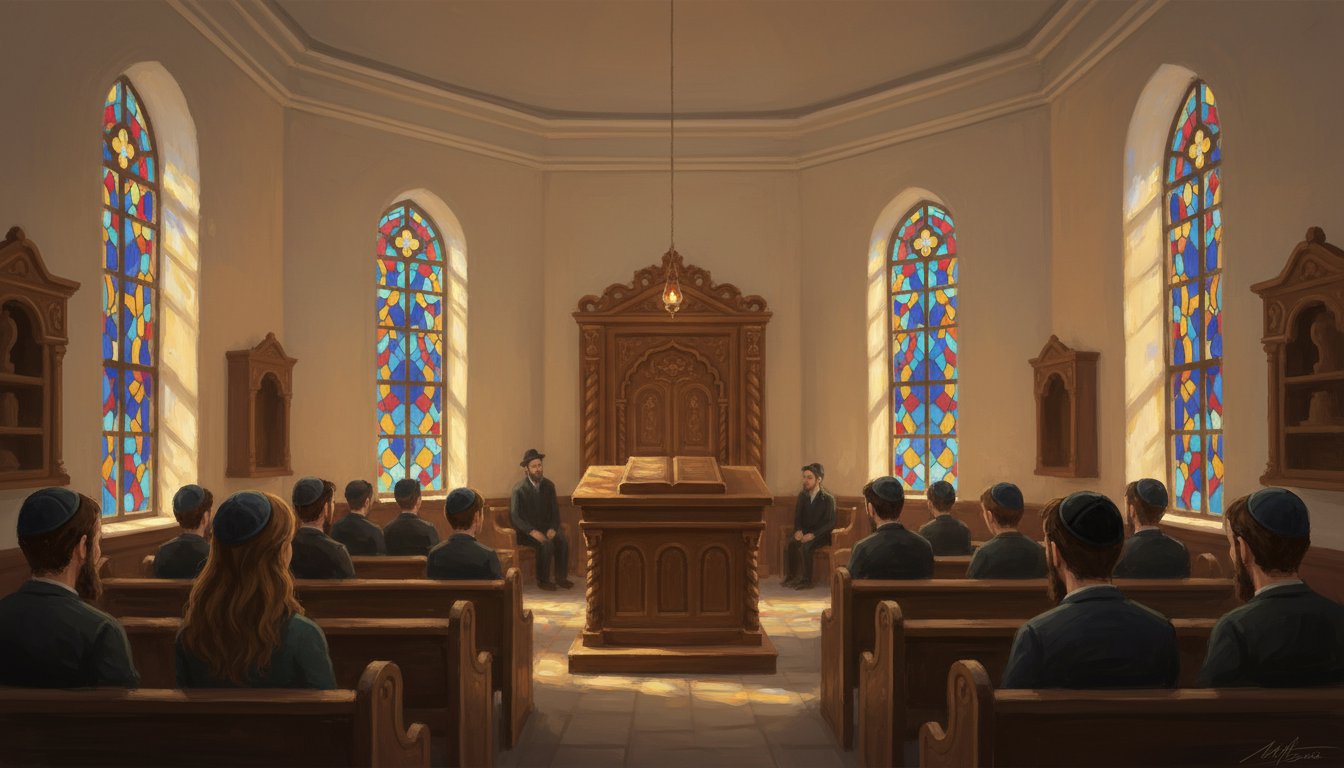
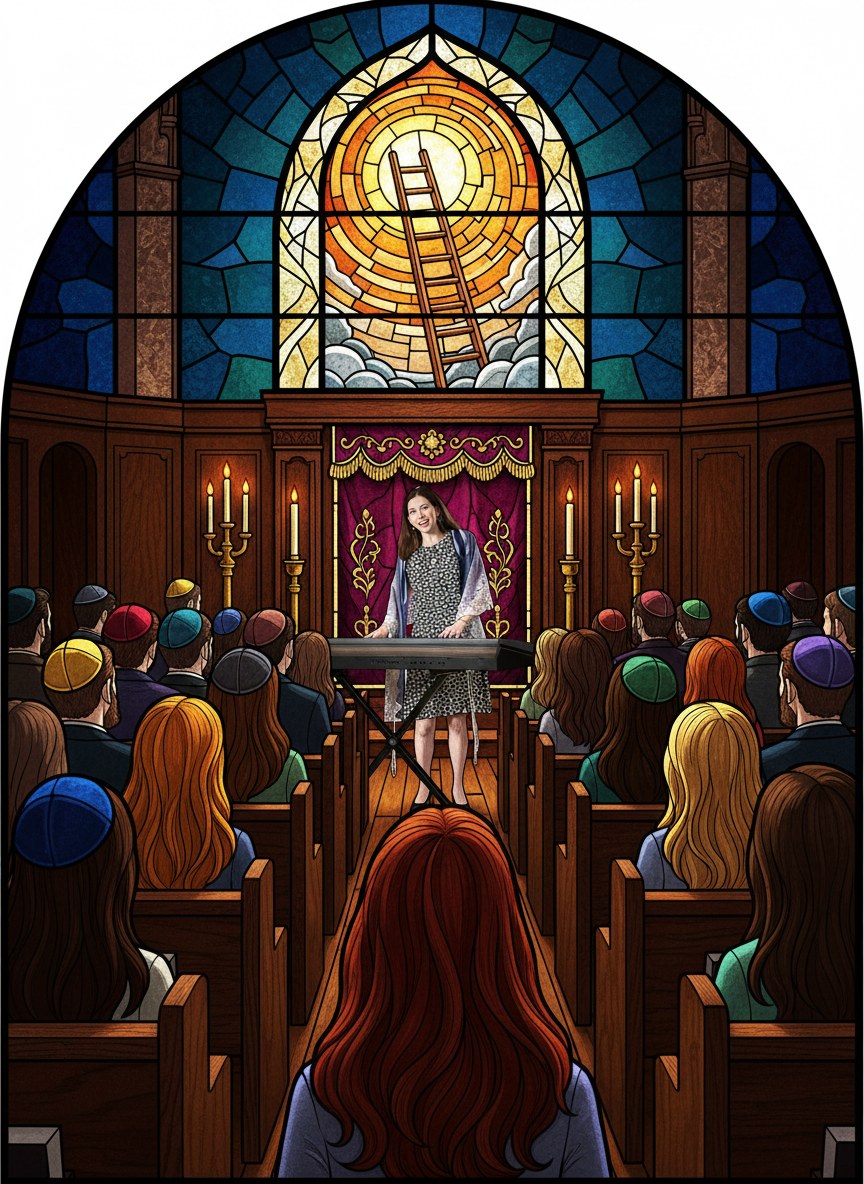
The sanctuary takes its cue from the churches that hold their rooms still: height, warm light, and windows that carry the room's story in color. It is the reverence of that form with the words of this tradition inside it. The bimah stands at the center, so the Torah reading is close to everyone instead of far from everyone. The ark is visible from every seat, with an eternal light above it. Benches, never fixed pews, so the room can move when the occasion asks. Nothing to eat or drink crosses its threshold, ever: food has a room of its own, which is the tradition's own line anyway. On Shabbos the phones rest.
The room teaches silence
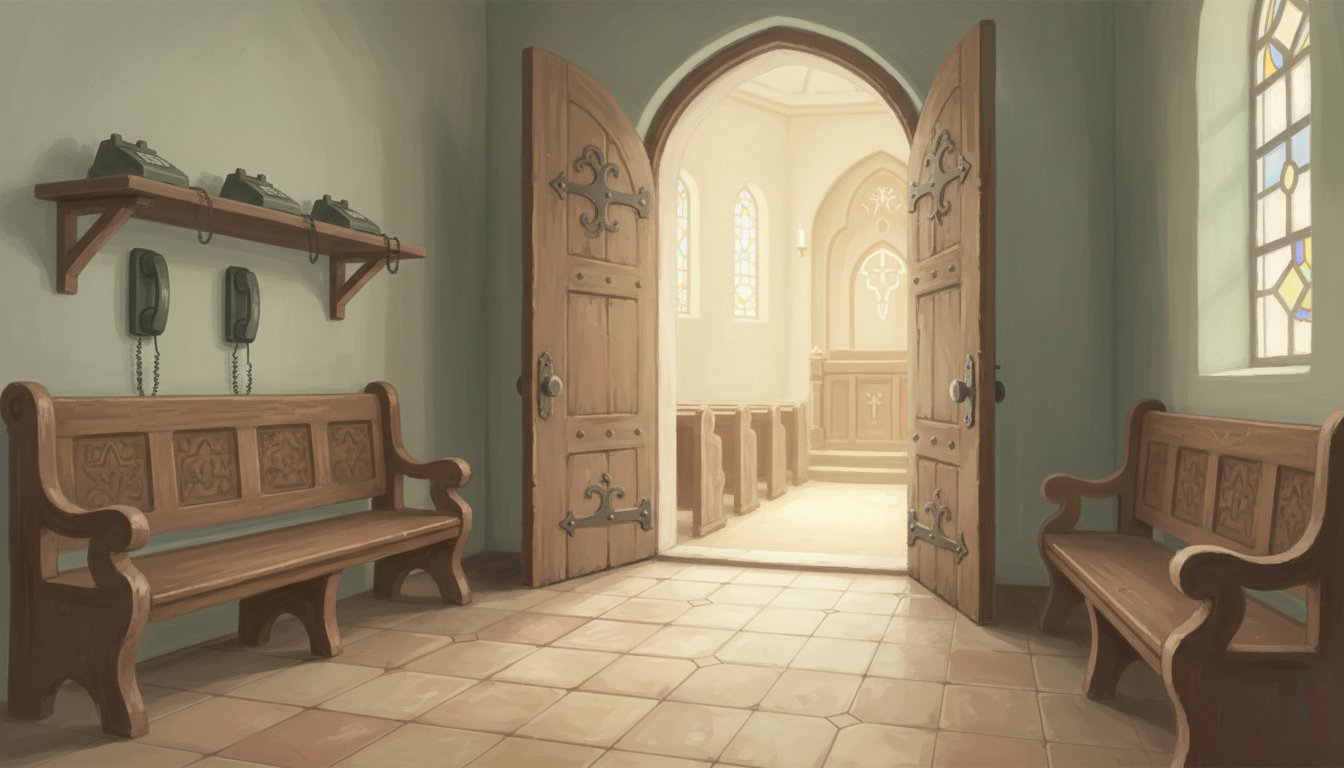
The sanctuary is quiet the way a church is quiet, and it starts at the door. A small entry room stands between the street and the sanctuary: you come in, the phone rests face down on the shelf, and you step in already somewhere else. What Shabbos does once a week, the door does every day. The light is kept low and warm, with the ark and the bimah lit brightest, so the eye lands where the room means it to. Stained glass carries the community's own story: the tablets, Devorah's palm tree, and the open goodbye of Genesis 50. The floor is laid in wood rather than stone, a floor the whole room can go down on at Vaanachnu koreim, and the tall ceilings still give the room its own sound, where one voice carries and one cough is heard by everyone. The silence is never announced. It is the default the room itself teaches.
The table gets a room of its own
Across from the sanctuary, on the main floor and with almost the same dignity, stands the social hall: the kiddush, the meals, the talking. It is not a basement and not a corridor. It is the second-most honored room in the house, because the table is where the community actually lives. A solid wall separates the two rooms, with separate doors. They are joined by the corridor and by when they are used, never by sight: no one at prayer should look across at people eating, and no one eating should feel watched while they eat. During davening the hall belongs to whoever is not davening, unseen and unjudged. When the prayers end, the hall comes alive.
Three doors, one room
- Kneses Yisroel. The gathering of Israel. The center of the main floor, men and women seated alike. Anyone who wants separation steps up and out of it, which is why the center stays open to everyone.
- Ezras Gevarim. The men's gallery, raised along one side in the old style. A place you choose, never a place you are sent.
- Ezras Nashim. The women's gallery, raised along the other side. A place you choose, never a place you are sent.
In the old world the raised gallery was where women were put. Here the galleries are chosen and honored, and nobody is assigned a seat anywhere in the room.
What the room does
Aliyot. The gabbai calls men to the Torah. That is the tradition's shape, not a ceremony of exclusion, and the founding words carry it so it is never apologizing for itself in the room.
The women's voice. It lives in the founding words themselves: divrei Torah, teaching, the megillah, and a room where everyone sings. No woman leads the song before the mixed room during davening; the room sings together instead.
The gabbai. A woman, by design, hired from the start as gabbai and lay leader, with a second gabbai beside her. The aliyot list, the flow of the service, and the honors all belong to her. The role is logistics, and the logistics are hers.
The rabbi. Makom is built to stand whole from the start, and the labor goes in now, in the preparation. Whether a rabbi is also hired is left to a vote of the members. Any rabbi ordained by a notable Jewish organization is graciously accepted by Makom, male or female, as long as that individual is properly ordained. And should a posek ever want to join Makom, he is welcome the way anyone is welcome: by walking in the door.
Prostration. At "Vaanachnu koreim" in the Aleinu, the whole room goes down fully, flat on the floor, as in the Temple: the gesture the room already keeps on Yom Kippur, kept every day. The wood floor answers the halacha's concern about stone, so no mats are needed at the seats.
The door asks nothing
Dress. Come as you are. There is no rule at the door for what anyone wears. Makom encourages a kippah for men and skirts for women, and obligates no one. Dignity lives in those who lead the room: a kippah, a tallis, modesty in the one standing before it.
Touch. Greetings are warm and touchless: a yishar koach with a hand on the heart. A handshake declined is answered with warmth, never a scene, and never a second question. Personal practice is personal.
The open goodbye
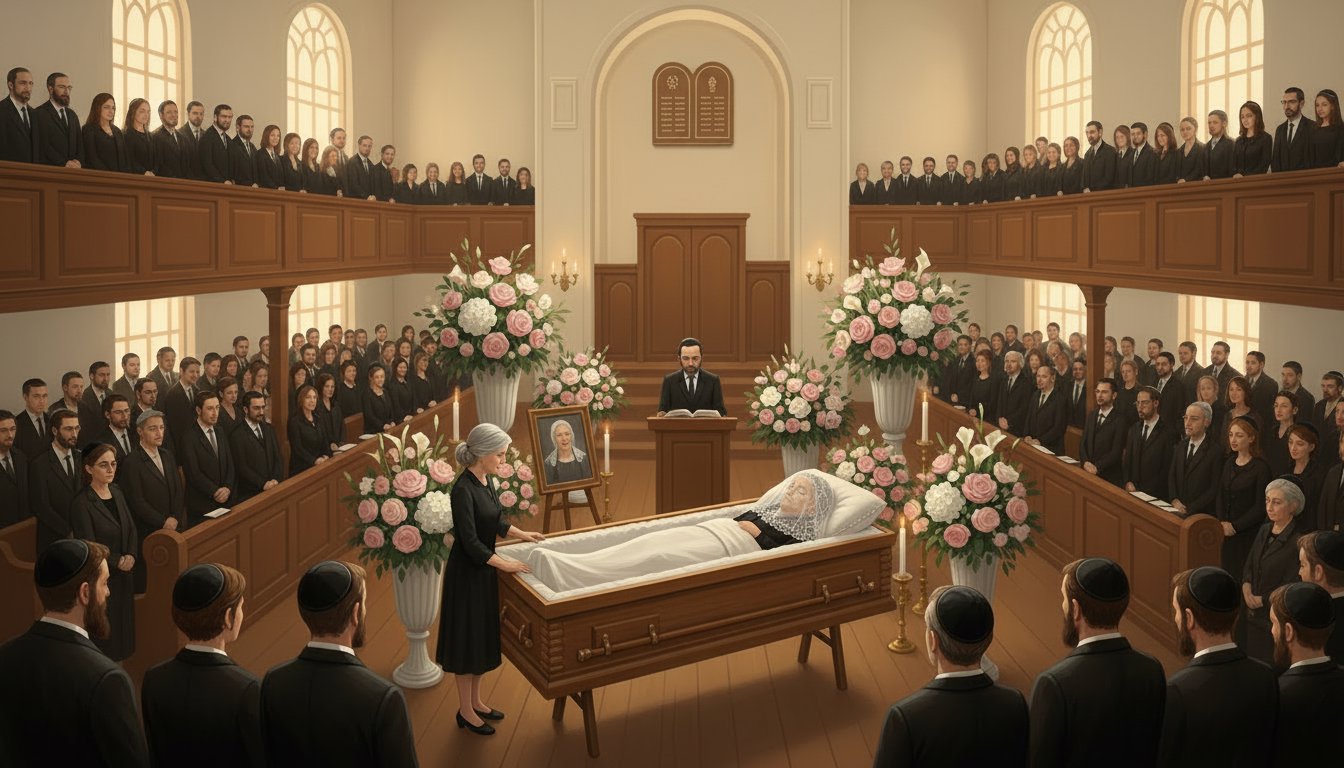
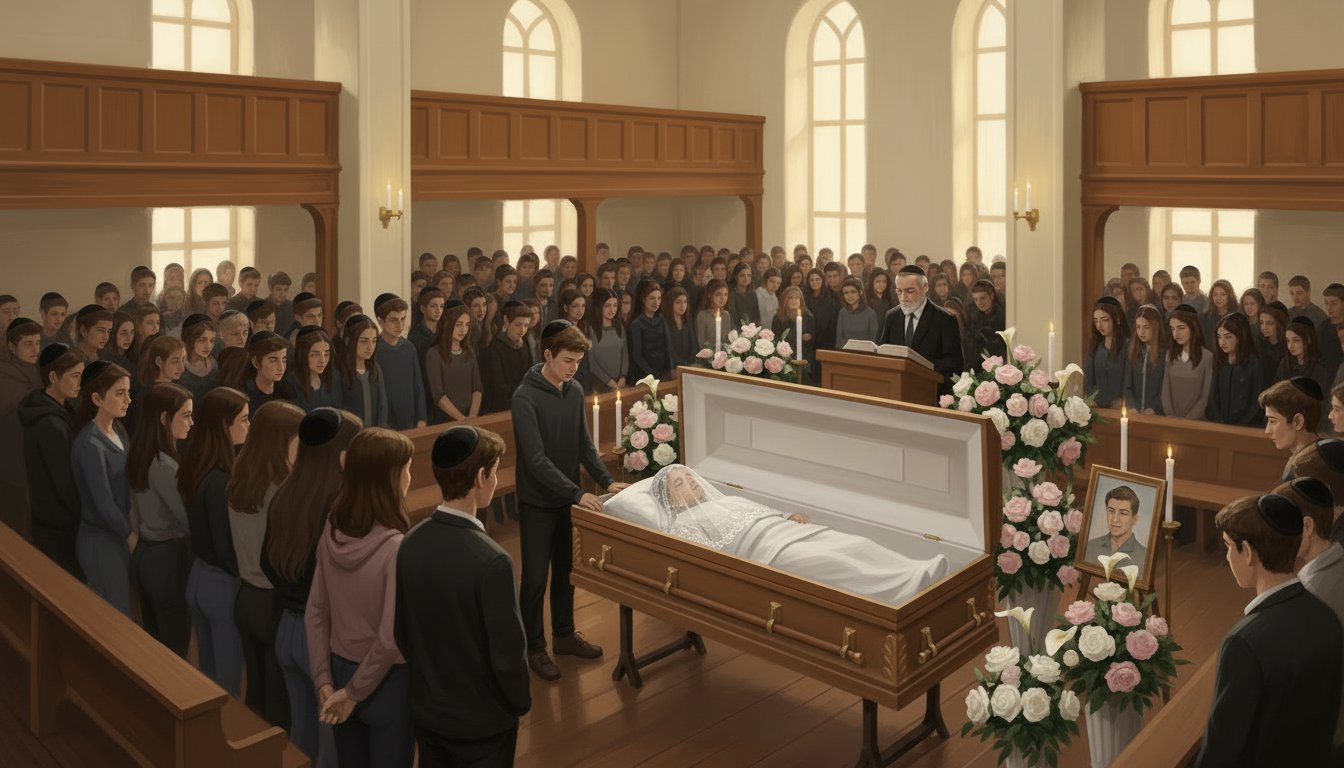
Makom embraces the open casket as its own standard. The community's conviction is that seeing a loved one one last time is honor, not indignity, and it is named on the founding day, on purpose, so no one ever reads the openness as the house softening later. The tradition's care stays in full: the tahara, the tachrichim, the plain wood box, and the shmirah, the burial society's vigil over the body. The tachrichim stay white linen, and within that linen the style is the family's, simple or as fine as it chooses. The standard asks one thing of the viewing: a lace veil over the face. The deceased is seen, and the gaze is answered, so the open goodbye honors both the face and the tradition's caution against gazing at it. Embalming is not treated as forbidden. The charter reads Genesis 50 as it is written: Joseph had his father Jacob embalmed, and was embalmed in his turn. A family that chooses it chooses something the Torah itself records.
On cremation the room stands where the whole of klal Yisroel stands: the body is given back to the earth, and the fire is outside what the room carries. Cremation is forbidden here, and the room provides none. A family that asks is received all the same, their feeling and their grief honored, and the answer remains no. One question the room keeps open for now: where Makom keeps its own cemetery, or a section in one, whether a place of grief may be made for ashes.
No family is obligated. A family that keeps the closed box is honored all the same, and every goodbye is led with warmth, not at the desk.
A chuppah under this roof
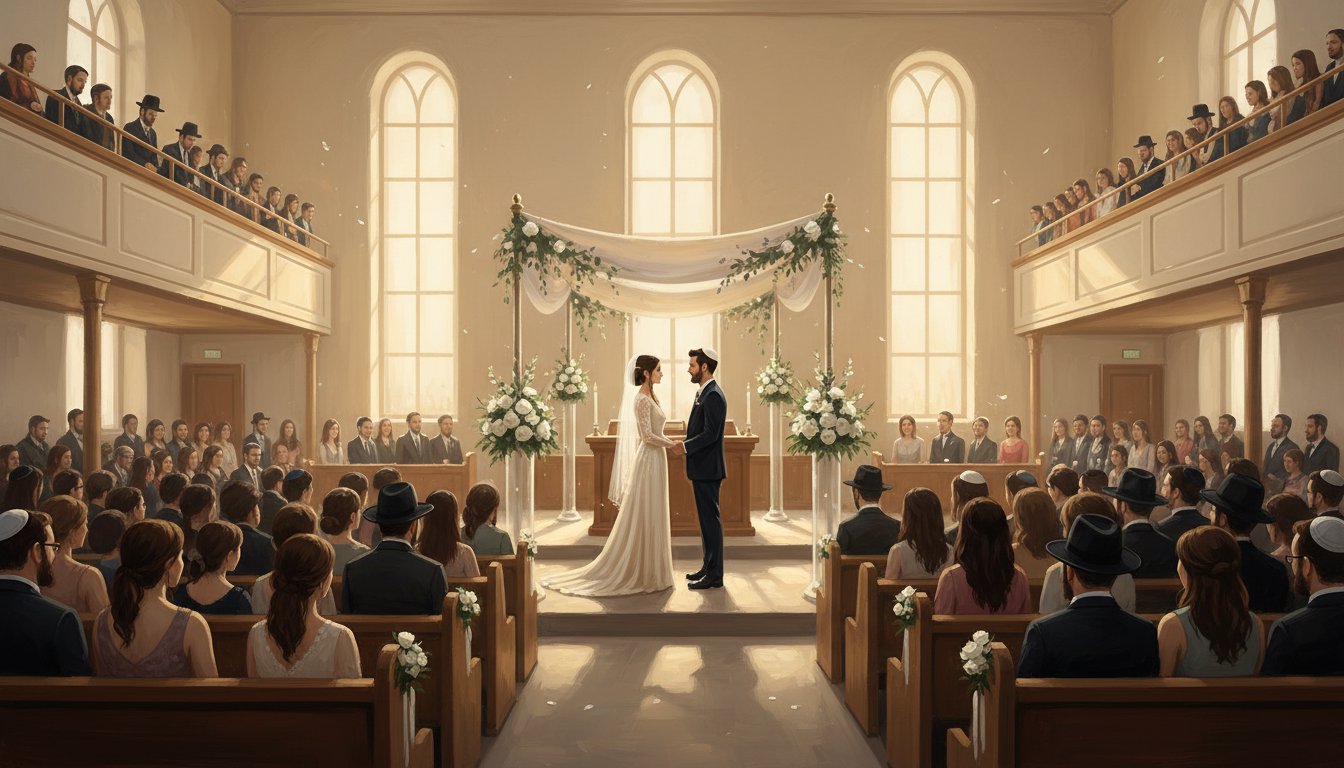
The chuppah stands on the center floor, in Kneses Yisroel: the one moment the whole room stands together is the moment the center was built for. The rite keeps the tradition's shape in full: kedushin, two kosher witnesses, the kesubah, and the sheva brachos.
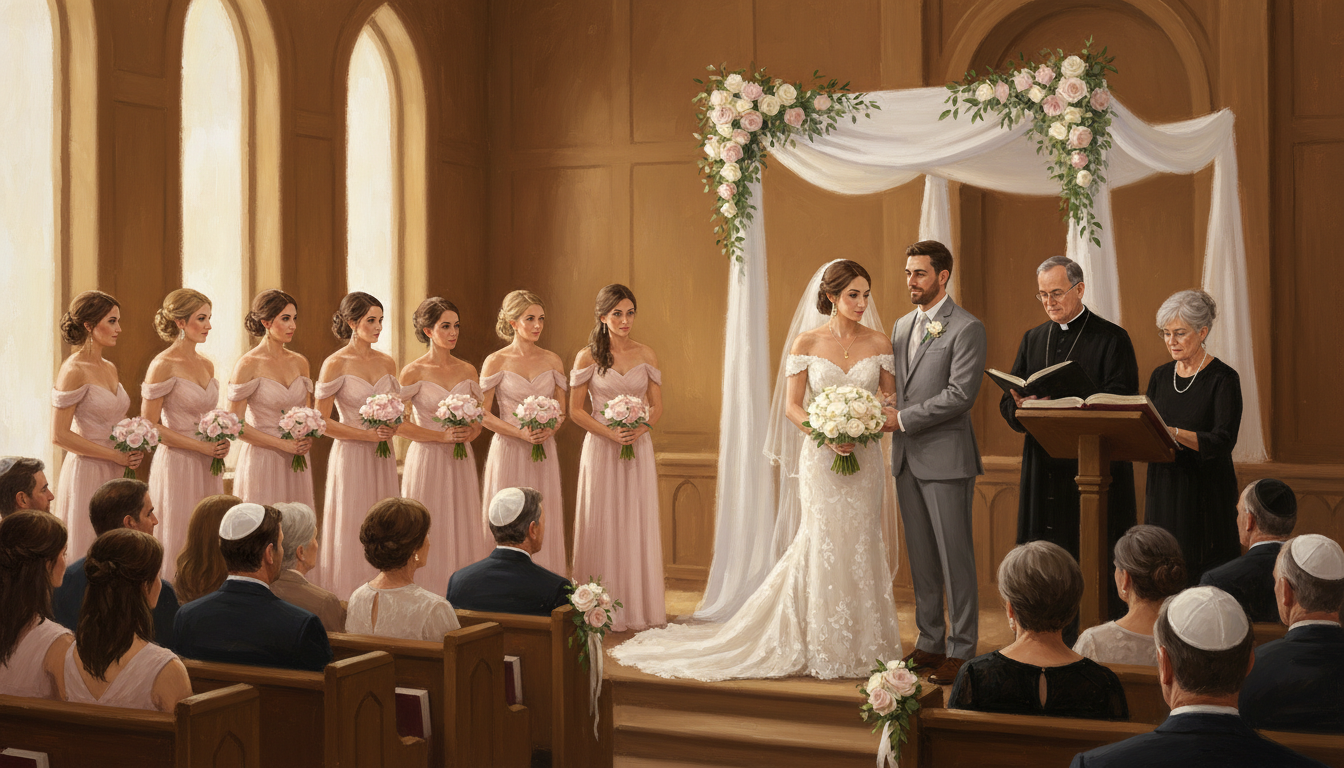
Who stands under it. The chuppah is the room's welcome made wood and cloth, and anyone the room receives may stand beneath it. When a couple joins two traditions, both of their worlds stand beside them under it: our gabbai says the sheva brachos, their own clergyman gives his ritual, and the canopy shelters the whole wedding. The rite itself keeps the tradition's shape in full, and the papers the state asks for are the couple's to make as they choose. Where the tradition sets a limit the room cannot settle for itself, in a wedding it hosts, a conversion it recognizes, or a celebration it is asked for, the room says so plainly, and the answer is not improvised.
A word to a Jewish same-sex couple. The room's answer is yes, said plainly: the chuppah stands for two Jews marrying each other, whatever their gender, and the rite is carried in full. Kedushin, two kosher witnesses, the kesubah, and the sheva brachos: nothing of the tradition's shape is set aside, because nothing needs to be. The canopy was raised for a home built on the tradition, and a home has no test of gender. The room's word to every couple beneath it is the same word it has always given: you are received.
When. The room keeps the day the way the tradition intends, and the tradition does not hold weddings on Shabbos. A couple who wants Shabbos woven into their wedding has the chuppah Friday afternoon, the seudah flowing into Shabbos, and sheva brachos at the table all day. The wedding touches Shabbos without landing on it.
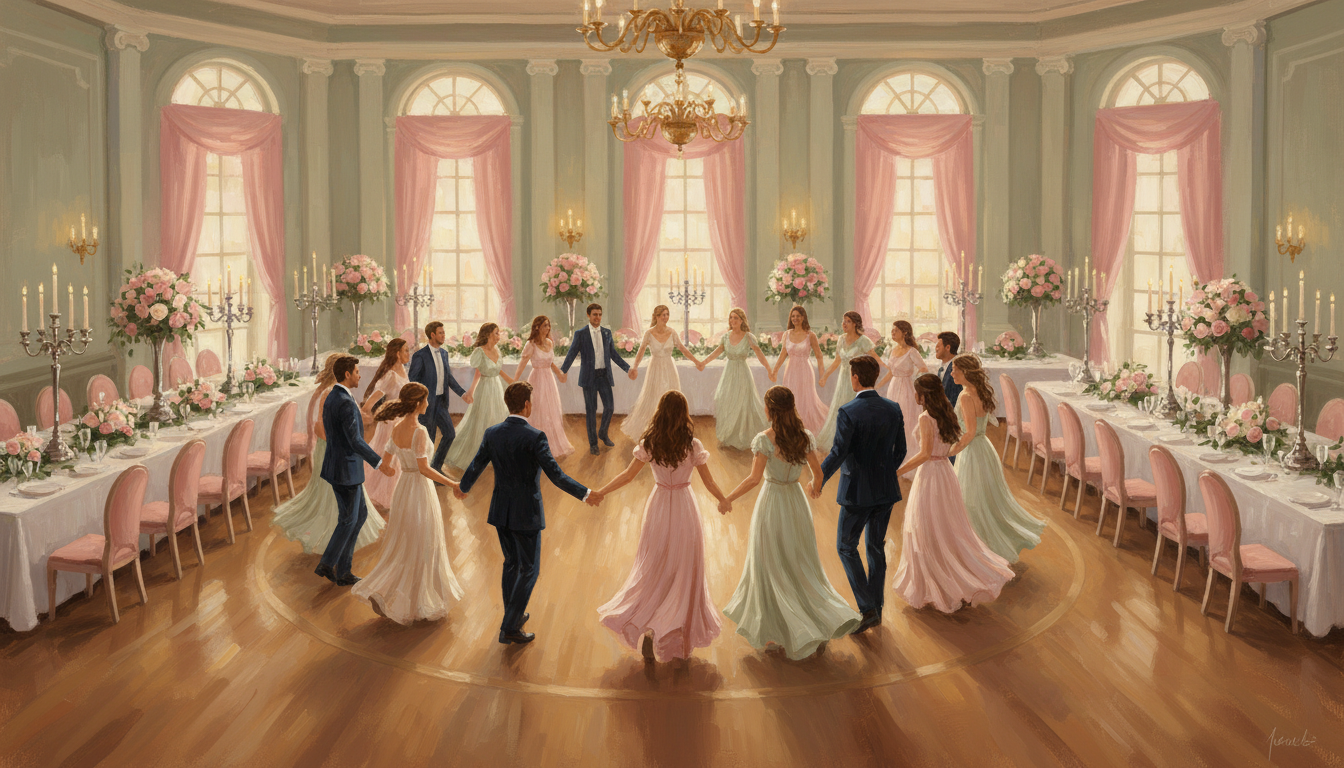
Separation follows davening, not the building. What the three doors keep apart is davening. At the simcha the room is one room: seating and dancing are mixed throughout, because the table is welcome territory and a wedding is the table's work, not the sanctuary's.
A theater of our own
Makom hosts a theater of its own. The curtain rises four times a year, once each season, and the house is open to the whole community: the room’s own people, their families, and anyone who walks in the door.
A room that keeps silence knows what a stage is for. The sanctuary holds the awe, the table holds the warmth, and the theater holds the stories: the ones the tradition has always told out loud, staged by the people who live here, for the people who live here.
Recognition, not submission
Conversion and a get take a real beis din of three, so Makom points members to established batei din and accepts what those courts grant. The recognition runs one way: no outside court rules over Makom itself. The charter outranks, and private life is never asked about.
The whole thing in one line
The day is kept in the room, and Shabbos is kept at the table.
Everything above is that line, drawn as a building.
The stained glass and the paintings
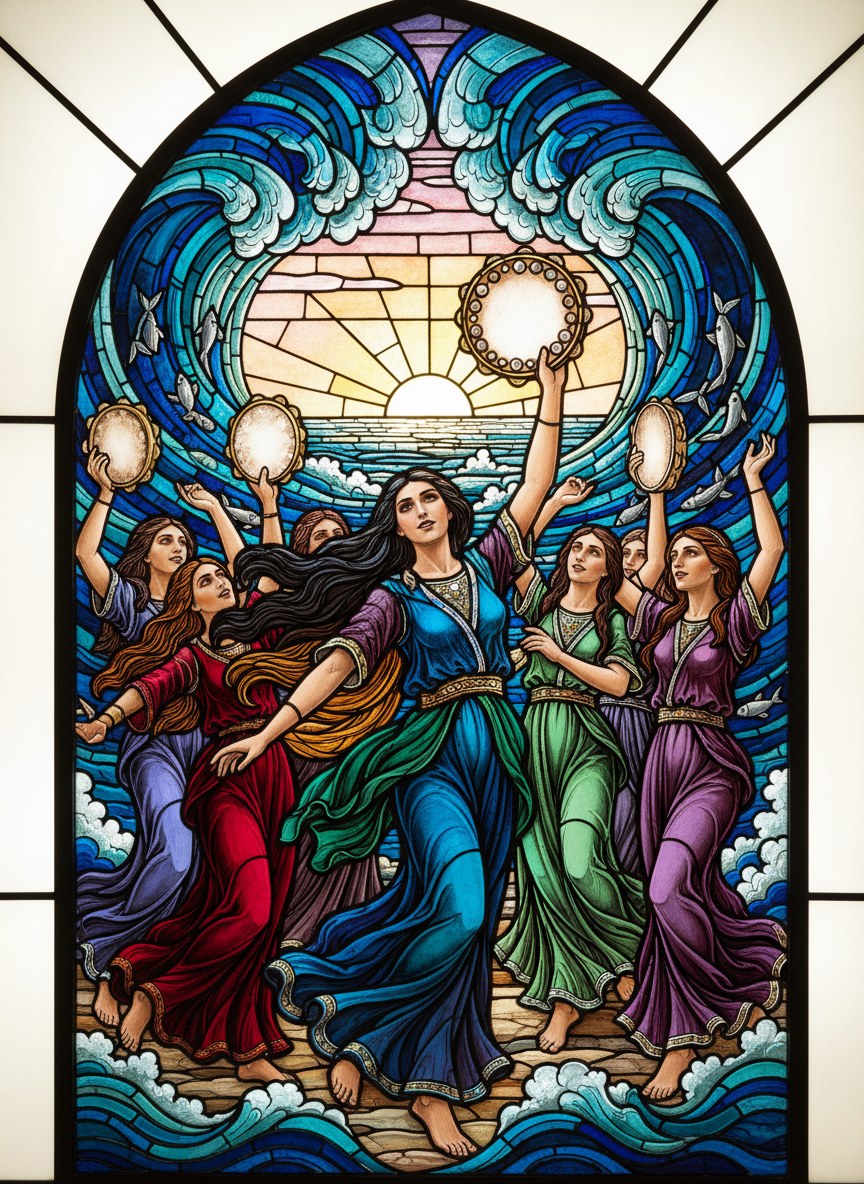
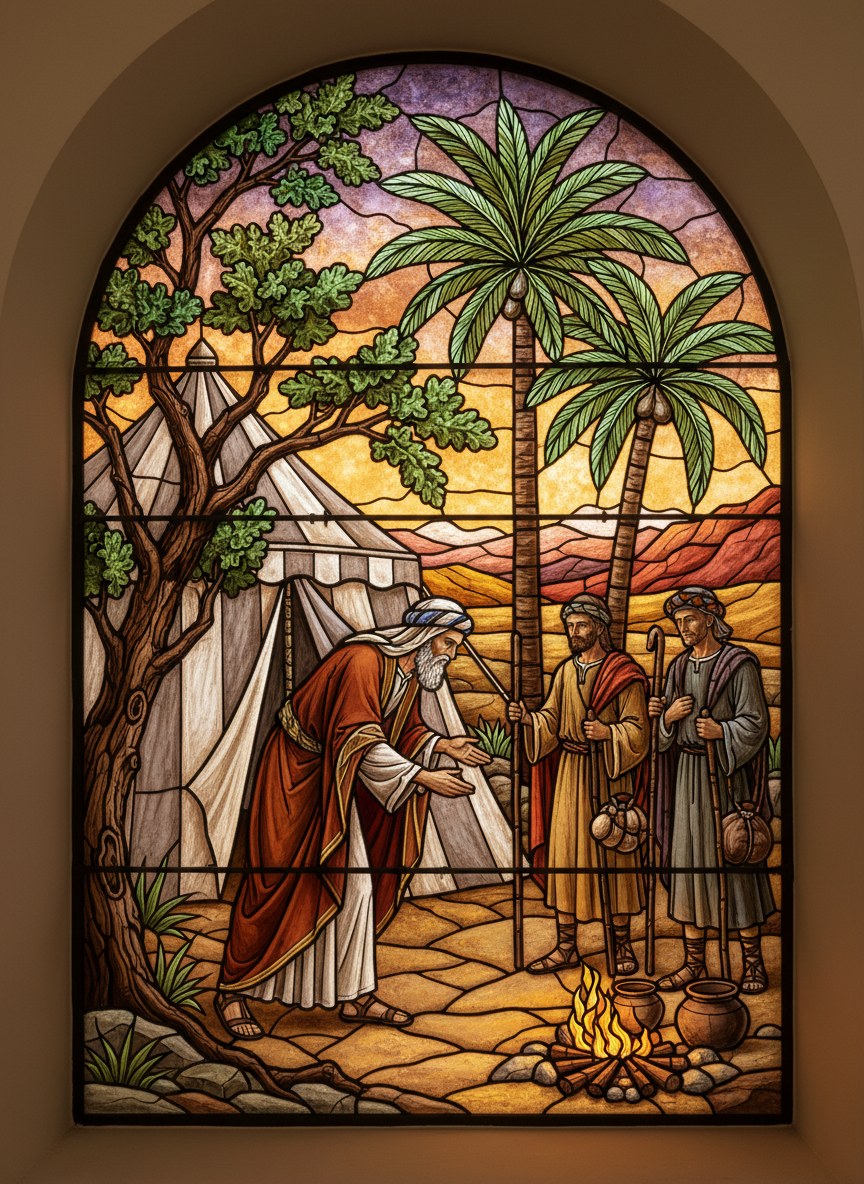
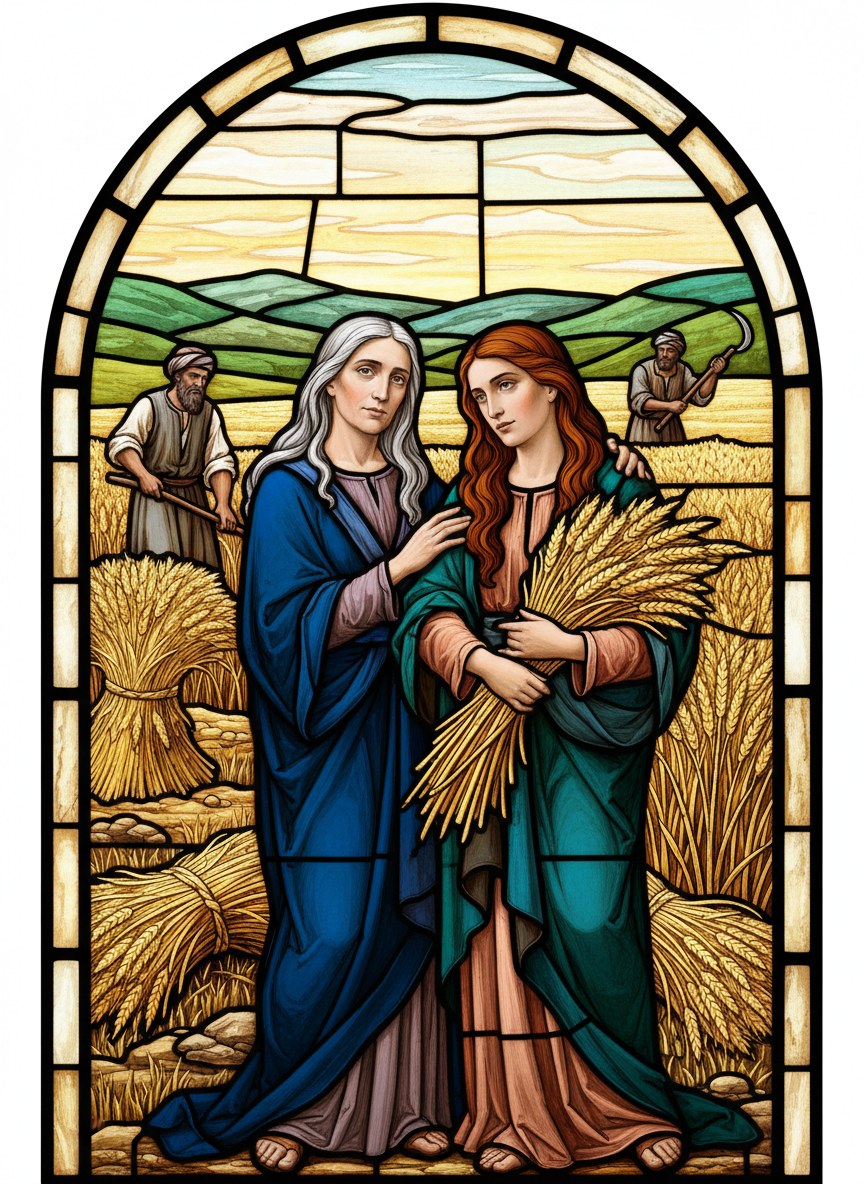
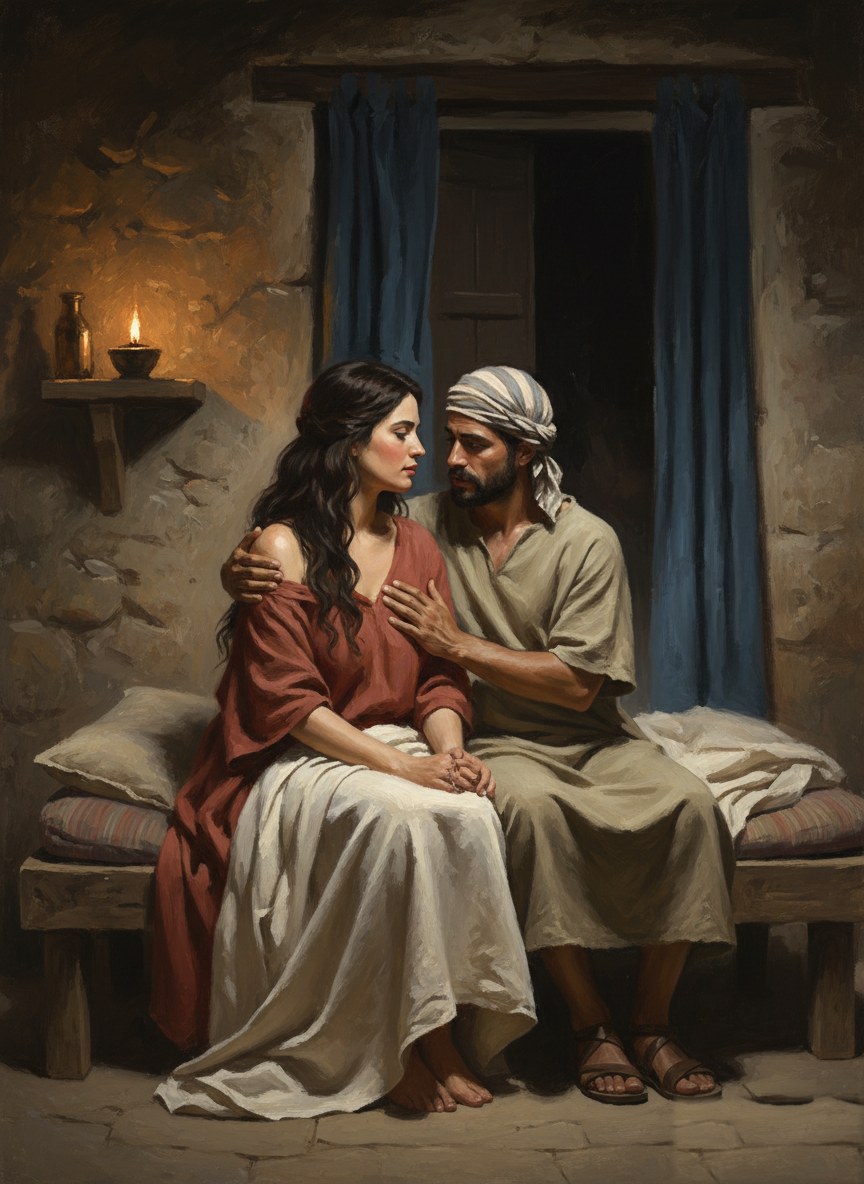
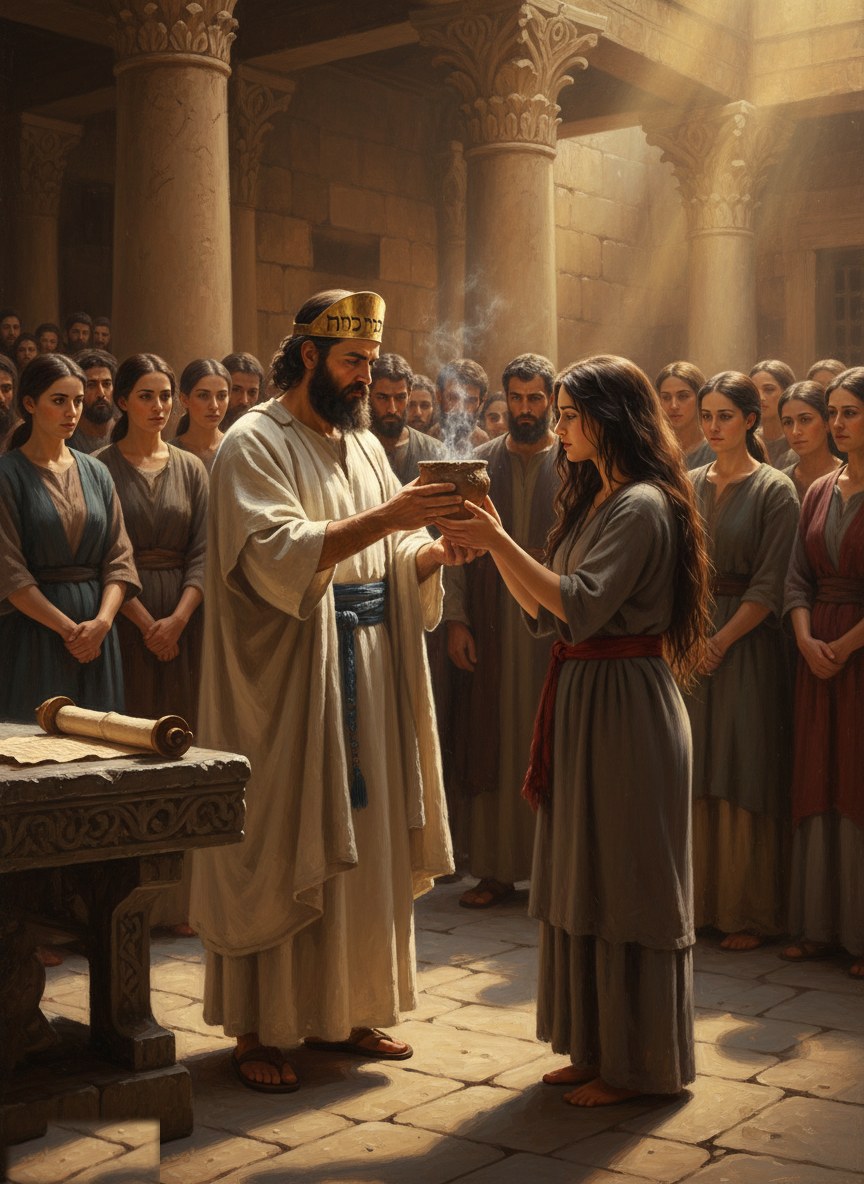
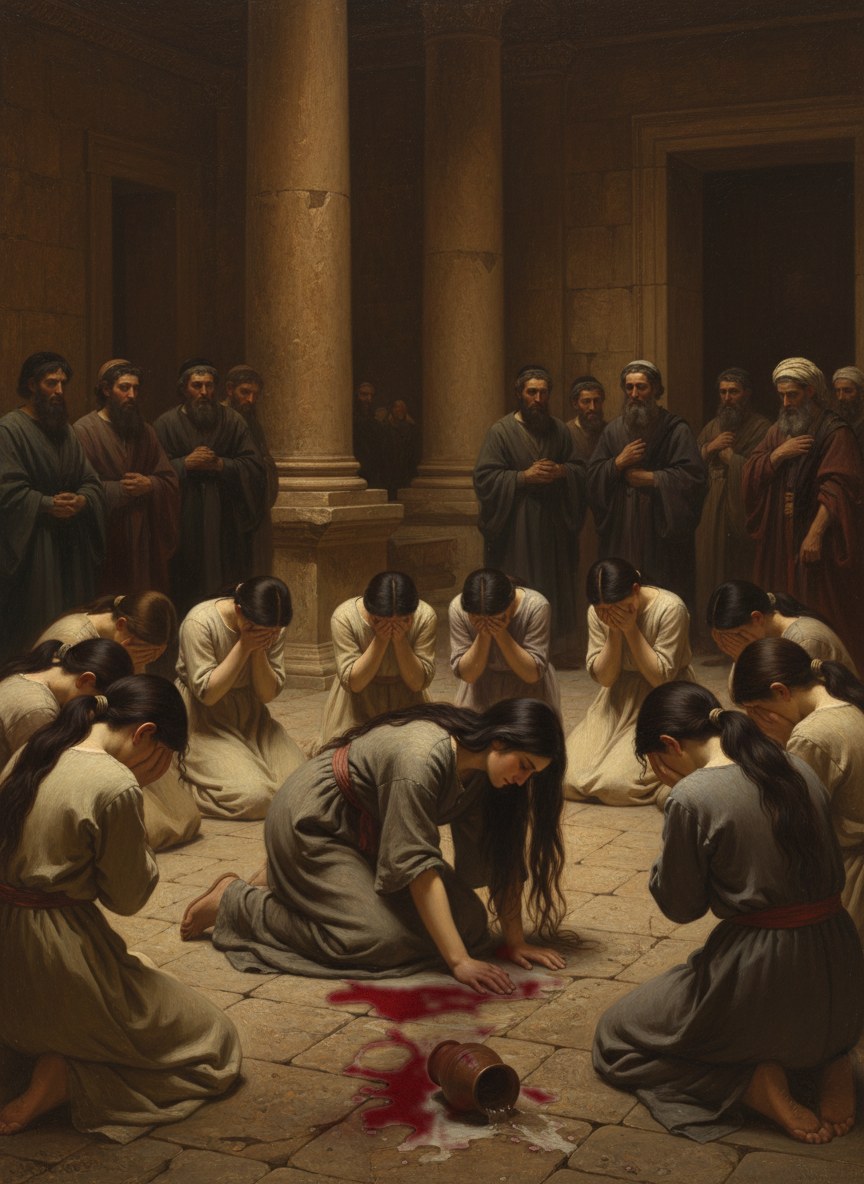
The windows carry the room’s own story in color: Jacob’s ladder over the ark, Miriam and the women singing at the sea, Abraham’s open tent, Ruth and Naomi in the barley field, and Devorah judging beneath her palm. Beside them hang three paintings of the sotah rite, the Torah’s most searching trial, from the marriage it begins in to the courtyard where it ends.